
 ?>
?>
 By
By Here in the Ozarks, we get an average of 44.71 inches of rain every year. When those heavy spring thunderstorms or lingering fall showers hit, your home relies on one crucial system to keep the water out: your gutters.
Most homeowners don’t think about their gutters until it’s too late. It’s easy to assume that if they are attached to the roof, they are doing their job. But gutters are essentially a horizontal plumbing system, and just like your indoor pipes, they can back up, overflow, and cause massive structural damage.
At Springfield Gutter Cleaners, we inspect hundreds of homes every year. We see firsthand how a simple, neglected clog can escalate into a major structural crisis. If you wait until water is pouring into your living room, the damage is already done.
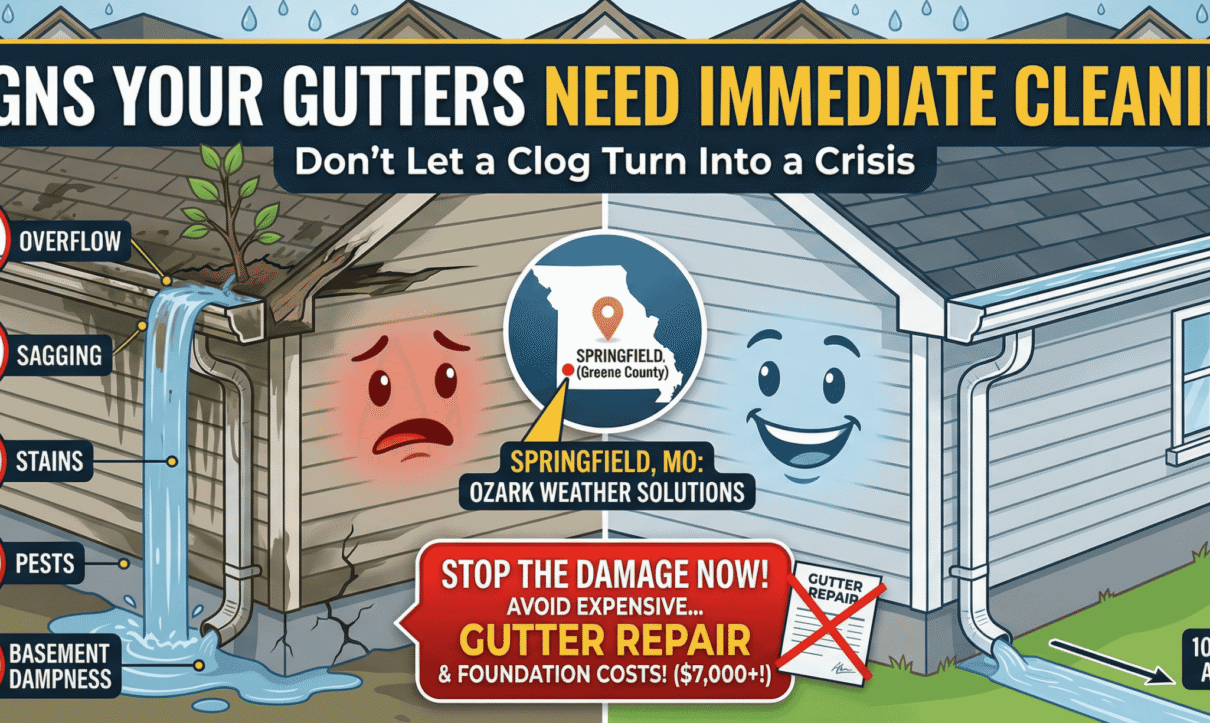
Here are the top five warning signs that your gutters need immediate attention—before you are stuck paying for an expensive foundation or gutter repair.
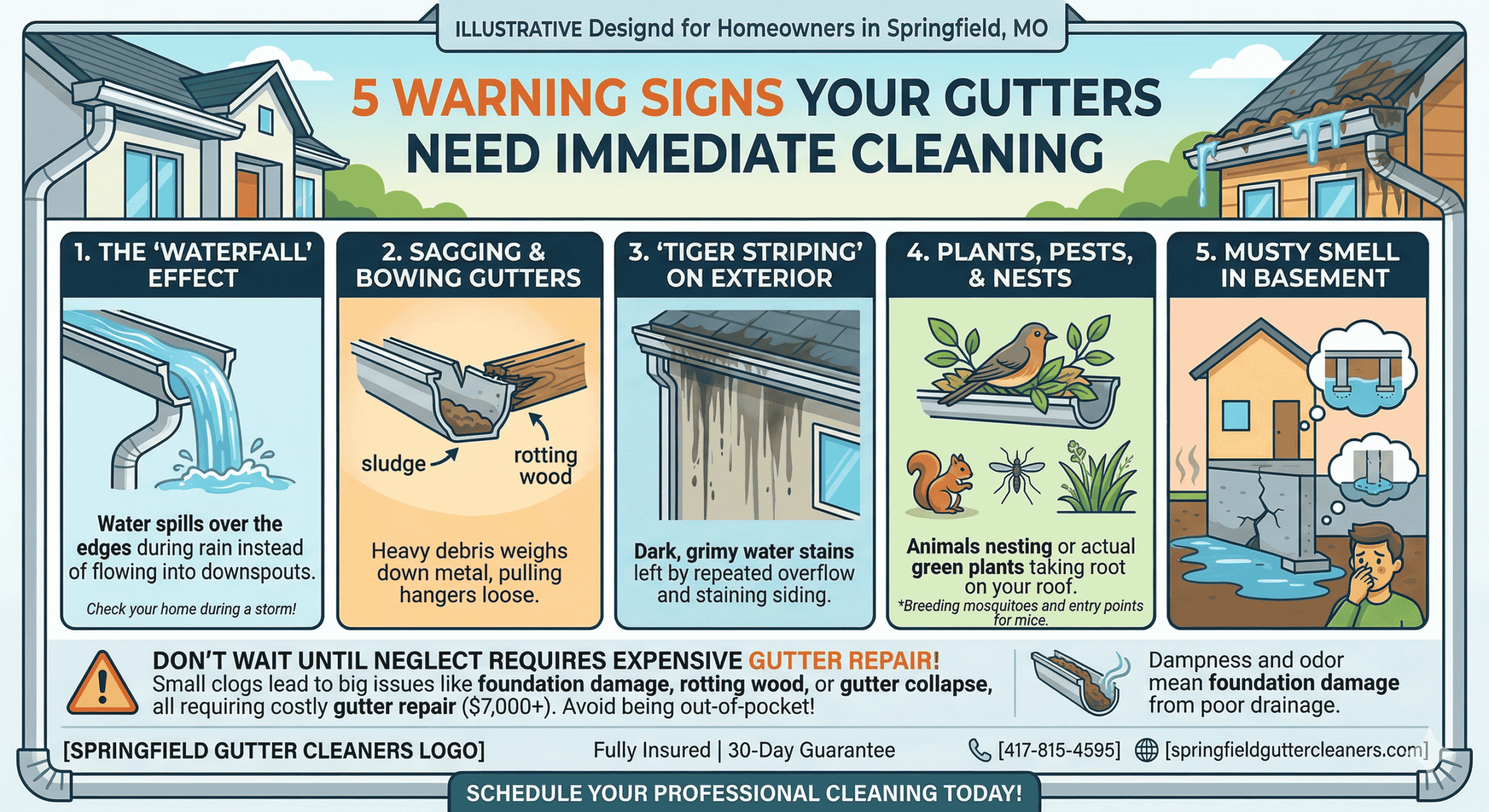
1. The “Waterfall” Effect During a Storm
This is the most obvious sign, but it’s one you will only catch if you step outside when it’s raining.
If water is spilling over the front or sides of your gutters like a waterfall, your system is failing.
The Cause: When leaves, pine needles, or those pesky maple “helicopters” block the downspout, the water has nowhere to go but over the edge.
The Danger: That waterfall is dropping hundreds of gallons of water directly onto your foundation. In Springfield, our expansive clay soil acts like a sponge. It absorbs that overflow, swells up, and pushes inward against your basement walls with immense hydrostatic pressure.
2. Sagging, Bowing, or Pulling Away from the Roof
Gutters should sit flush and tight against your fascia board (the wood behind the gutter). If you look up and notice your gutters look wavy, are sagging in the middle, or have a visible gap between the metal and the wood, you have a heavy problem on your hands.
The Cause: Gutters are designed to hold water, which flows out quickly. They are not designed to hold wet, decaying organic sludge. A gutter packed with wet leaves and shingle grit can weigh hundreds of pounds.
The Danger: That extreme weight bends the metal and pulls the mounting screws right out of the wood. If caught early, a deep clean and a few tightened screws can save it. If ignored, the metal will warp permanently, meaning you will have to pay for a full gutter repair or replacement.
3. “Tiger Striping” on the Exterior
Take a walk around your house on a sunny day and look at the face of your gutters. Do you see vertical, dark, dirty streaks running down the metal? In the exterior maintenance industry, we call this “tiger striping.”
The Cause: Tiger striping happens when a gutter is consistently overflowing. As the dirty, debris-filled water washes over the lip of the gutter, it leaves a trail of grime that bakes into the paint.
The Danger: While tiger striping is primarily a cosmetic issue that ruins your curb appeal, it is a massive red flag. It proves that your system has been failing for months, meaning your foundation and siding have been taking a beating every time it rains.
4. Uninvited Guests (Birds, Pests, and Plants)
Your roof should not have its own ecosystem. If you look up and see a tiny sapling growing out of your gutter, or if you notice birds constantly landing on the edge of your roof with twigs in their mouths, you have an issue.
The Cause: When leaves and dirt sit in a gutter long enough, they decompose into rich, damp soil. This creates a perfect environment for wind-blown seeds to take root. It also creates a highly attractive nesting ground for birds, squirrels, and mice.
The Danger: Pests bring diseases and can eventually chew their way through your rotting fascia board into your attic. Furthermore, the standing water trapped by these “bug hotels” is the perfect breeding ground for thousands of Springfield mosquitoes in the summer.
5. A Musty Smell in the Basement
Sometimes, the loudest warning sign your gutters give you is actually inside your house. If your basement or crawlspace suddenly smells damp, musty, or earthy after a rainstorm, your gutters are likely the culprit.
The Cause: As mentioned earlier, clogged gutters dump water at the base of your home. Even if you don’t have a visible puddle on the floor, the concrete of your foundation is porous. It absorbs that moisture from the saturated clay soil outside.
The Danger: That musty smell is the first sign of mold and mildew growth. It means water is breaching your home’s envelope. The average water damage insurance claim in Missouri is around $7,000, and many policies will deny the claim if they trace the cause back to neglected gutter maintenance.
Expert Insight: The Danger of Shingle Grit
Here is something we frequently educate our clients about: You don’t need large trees in your yard to have clogged gutters. If you live in a newer neighborhood without mature oaks or maples, you might think you are safe. However, older asphalt roofs constantly shed small, heavy granules called “shingle grit.” This grit washes into your gutters, sinks to the bottom, and forms a dense, concrete-like sludge. It blocks water flow just as effectively as leaves, and its extreme weight is a leading cause of sagging gutters.
Even if you don’t have trees, you still need to check your troughs for grit buildup.
Actionable Tips: How to Check Safely
I always tell homeowners that the best way to monitor your gutters is from the safety of the ground.
-
The Rainy Day Walk: Grab an umbrella during the next Ozark downpour and walk the perimeter of your house. Look for waterfalls, leaks at the seams, and water pooling near the foundation.
-
The Binocular Check: On a dry day, use a pair of binoculars to look for gaps between the gutter and the roof, tiger striping, or debris peeking over the edge.
-
Check the Splash Blocks: Ensure your downspouts are actually pushing water at least 5 to 10 feet away from the base of the house.
FAQ: Springfield Gutter Issues
1. Can a simple cleaning fix my sagging gutters?
If the gutters haven’t permanently warped and the wood behind them isn’t completely rotted, yes. During a professional cleaning, we frequently re-secure loose hangers to get the gutter flush with the roofline again. However, if the metal is bent, a localized gutter repair may be necessary.
2. Should I wait until all the leaves fall in late November to clean them?
If your gutters are already showing these signs of stress in October, do not wait. It is better to have them cleaned twice in the fall than to let a massive clog sit and pull your gutters off the house during a heavy November rainstorm.
3. Does insurance cover damage if my gutters were clogged?
Usually, no. Standard homeowners insurance covers sudden, accidental water damage (like a burst pipe). Damage caused by overflowing gutters is generally classified as “preventable negligence,” leaving you to pay the repair bill out of pocket.
Conclusion: Listen to Your House
Your home will usually tell you when it’s struggling. Whether it’s a waterfall over your front door, a stray weed growing on your roof, or a musty smell in the basement, ignoring these signs in Springfield is a costly gamble.
Don’t wait for a $190 maintenance chore to escalate into a $7,000 disaster.
Are Your Gutters Showing Warning Signs?
Keep your foundation dry and your family safe. Let the local pros at Springfield Gutter Cleaners handle the ladders and the muck.
Call us today at 417-815-4595 or visit our website to schedule your professional cleaning!